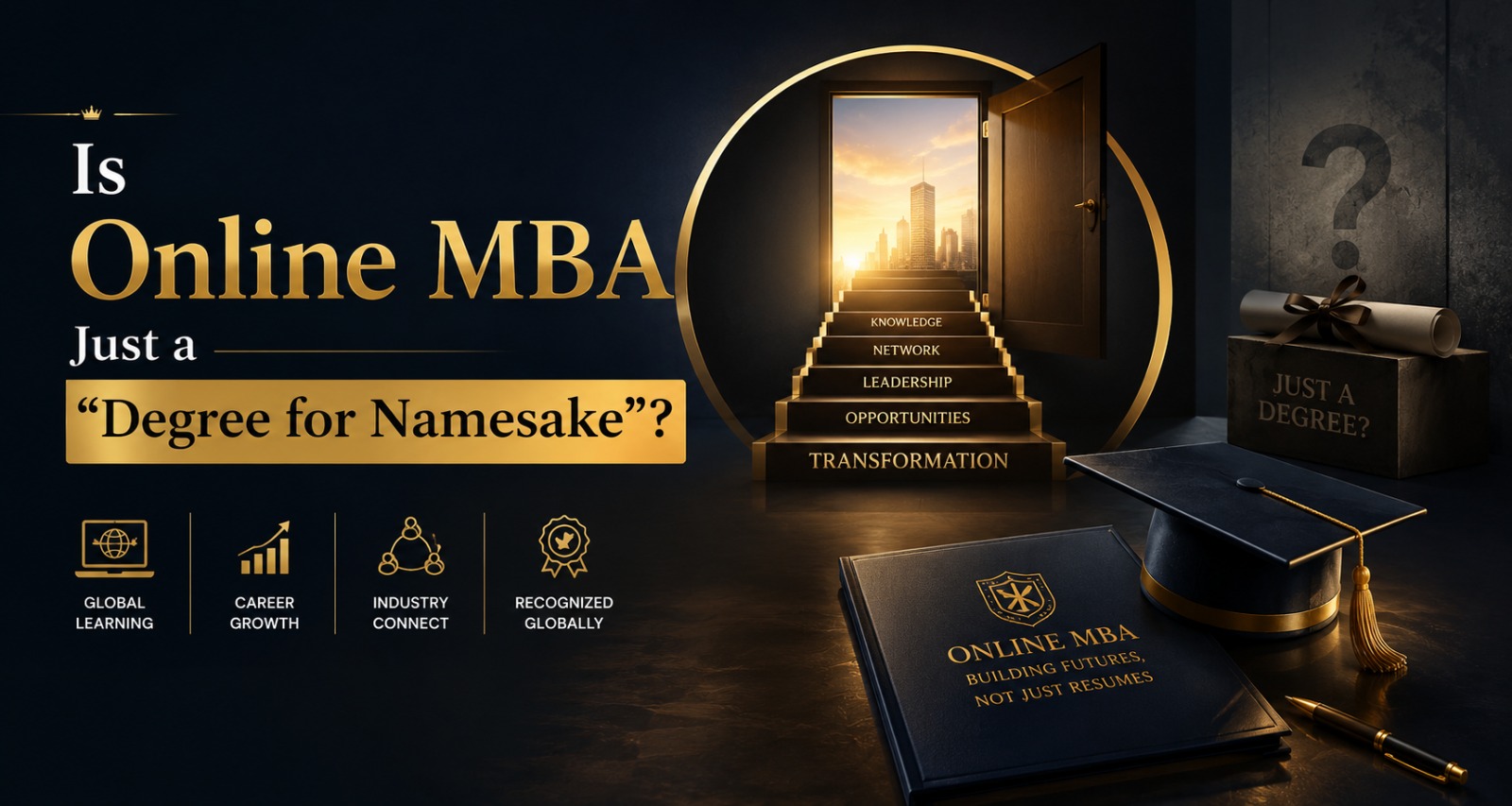
Is Online MBA Just a Degree for Namesake? The Truth Every Student Should Know
Online education has transformed the way students and professionals pursue higher education. Among the most popular options today is the online MBA, offering flexibility, affordability, and career growth opportunities without requiring a career break. However, many people still wonder whether an online MBA is merely a degree for namesake or a qualification that genuinely adds value in the job market.
The reality is that the perception of online MBA programs has evolved significantly. Leading universities now provide interactive learning experiences, industry-relevant projects, networking opportunities, and career support that make online education more effective than ever before. Understanding the true value of an online MBA requires looking beyond outdated assumptions and evaluating its career impact, employer recognition, practical benefits, and long-term opportunities.
Understanding the Rise of Online MBA Programs
The demand for flexible education has increased dramatically over the past decade. Working professionals, entrepreneurs, and students from smaller cities are increasingly seeking ways to enhance their qualifications without disrupting their careers or relocating to another city.
Online MBA programs have emerged as a practical solution to this challenge. Modern programs are no longer limited to recorded video lectures. Today, universities offer live interactive classes, industry projects, case-study-based learning, networking opportunities, and AI-powered learning platforms that create a comprehensive educational experience.
These advancements have significantly improved the recognition and credibility of online MBA degrees. As more reputed universities enter the online education space, employers are also becoming increasingly receptive to qualified candidates who have earned management degrees through digital learning platforms.
Is Online MBA Worth It in India?
One of the most frequently asked questions among students is whether an online MBA is worth pursuing in India. The answer depends on several important factors, including career objectives, university selection, and personal commitment to learning.
For professionals seeking promotions, managerial roles, career transitions, or leadership opportunities, an online MBA can be a valuable investment. The flexibility of online education allows learners to continue working while simultaneously developing business and management skills.
However, students must choose accredited and reputable institutions to maximize the value of their degree. A recognized university, combined with active participation in projects, internships, certifications, and networking activities, can significantly enhance career prospects and professional growth.
Does an Online MBA Have Real Career Value?
A common misconception is that online MBA degrees are useful only for adding qualifications to a resume. In reality, employers increasingly focus on skills, practical knowledge, and professional experience rather than solely evaluating the mode of education.
Online MBA graduates often develop strategic thinking, leadership capabilities, business communication skills, analytical reasoning, and problem-solving abilities. These competencies are highly valued in today's business environment and can contribute directly to career advancement.
For working professionals, online MBA programs offer the added advantage of immediate application. Students can implement concepts learned in the classroom directly within their workplace, creating a stronger connection between theory and practice. This practical learning approach often strengthens long-term career outcomes.
Are Online MBA Degrees Respected by Employers?
Employer perception of online MBA programs has improved considerably in recent years. As remote work, digital collaboration, and online learning become more common, organizations are increasingly recognizing the value of flexible education models.
Most employers evaluate candidates based on university accreditation, professional experience, communication skills, technical knowledge, and interview performance rather than simply distinguishing between online and traditional learning formats.
Degrees earned from UGC-approved universities, NAAC-accredited institutions, and recognized management schools generally receive greater acceptance within the job market. While some highly competitive sectors may still prefer graduates from top full-time MBA programs, the gap between online and traditional MBA recognition continues to narrow across many industries.
Online MBA vs Regular MBA: Which Offers Better Value?
The comparison between online MBA and regular MBA programs often depends on individual goals and circumstances. Both formats offer unique advantages and serve different types of learners.
Traditional MBA programs typically provide stronger campus experiences, in-person networking opportunities, and immersive classroom environments. However, they often require significant financial investment and may involve taking a career break.
Online MBA programs offer flexibility, affordability, and the ability to continue earning while studying. They are particularly beneficial for working professionals who want to enhance their qualifications without interrupting their careers. Ultimately, the better option depends on factors such as career stage, financial situation, learning preferences, and long-term objectives.
Skills Gained Through an Online MBA
- Leadership and team management
- Strategic business planning
- Business communication skills
- Problem-solving and decision-making
- Analytical thinking abilities
- Time management and productivity
Benefits of Pursuing an Online MBA
- Flexible learning schedules
- Affordable tuition fees
- Career continuity without resigning from work
- Access to quality education from anywhere
- Industry-relevant curriculum
- Opportunity to apply learning immediately at work
Common Job Opportunities After an Online MBA
- Marketing Executive
- HR Manager
- Business Analyst
- Operations Manager
- Project Coordinator
- Digital Marketing Specialist
- Sales Strategist
Factors Employers Consider During Hiring
- University accreditation
- Relevant work experience
- Communication skills
- Practical business knowledge
- Problem-solving abilities
- Interview performance
Limitations of Online MBA Programs
- Limited campus exposure
- Reduced face-to-face networking opportunities
- Requires strong self-discipline
- Placement support varies by institution
- Practical exposure depends on program quality
- Perception gap still exists in some industries
Online MBA vs Regular MBA Comparison
| Factor |
Online MBA |
Regular MBA |
| Flexibility |
High |
Limited |
| Cost |
Affordable |
Higher |
| Networking |
Moderate |
Strong |
| Campus Experience |
Limited |
Full Exposure |
| Career Break Required |
No |
Usually Yes |
Advantages and Limitations of Online MBA
| Advantages |
Limitations |
| Flexible learning |
Limited campus exposure |
| Affordable fees |
Requires self-discipline |
| Continue working while studying |
Networking opportunities may vary |
| Accessible from anywhere |
Perception gap in some sectors |
Online MBA Career Benefits
| Benefit |
Career Impact |
| Leadership Skills |
Better management opportunities |
| Business Knowledge |
Improved decision-making |
| Strategic Thinking |
Enhanced problem-solving |
| Professional Qualification |
Greater career advancement potential |
| Industry Exposure |
Improved job readiness |
Frequently Asked Questions
Is an online MBA valid in India?
Yes. Online MBA degrees from UGC-approved and accredited universities are valid and recognized in India.
Is an online MBA worth it for working professionals?
Yes. Online MBA programs allow professionals to continue working while developing management skills and advancing their careers.
Are online MBA degrees respected by employers?
Many employers now recognize and value online MBA degrees, especially when earned from reputable and accredited institutions.
What job opportunities are available after an online MBA?
Graduates can pursue careers in marketing, human resources, finance, operations, business analytics, sales management, and project management.
Does an online MBA increase salary potential?
An online MBA can improve career growth opportunities and earning potential when combined with relevant skills, work experience, and professional performance.